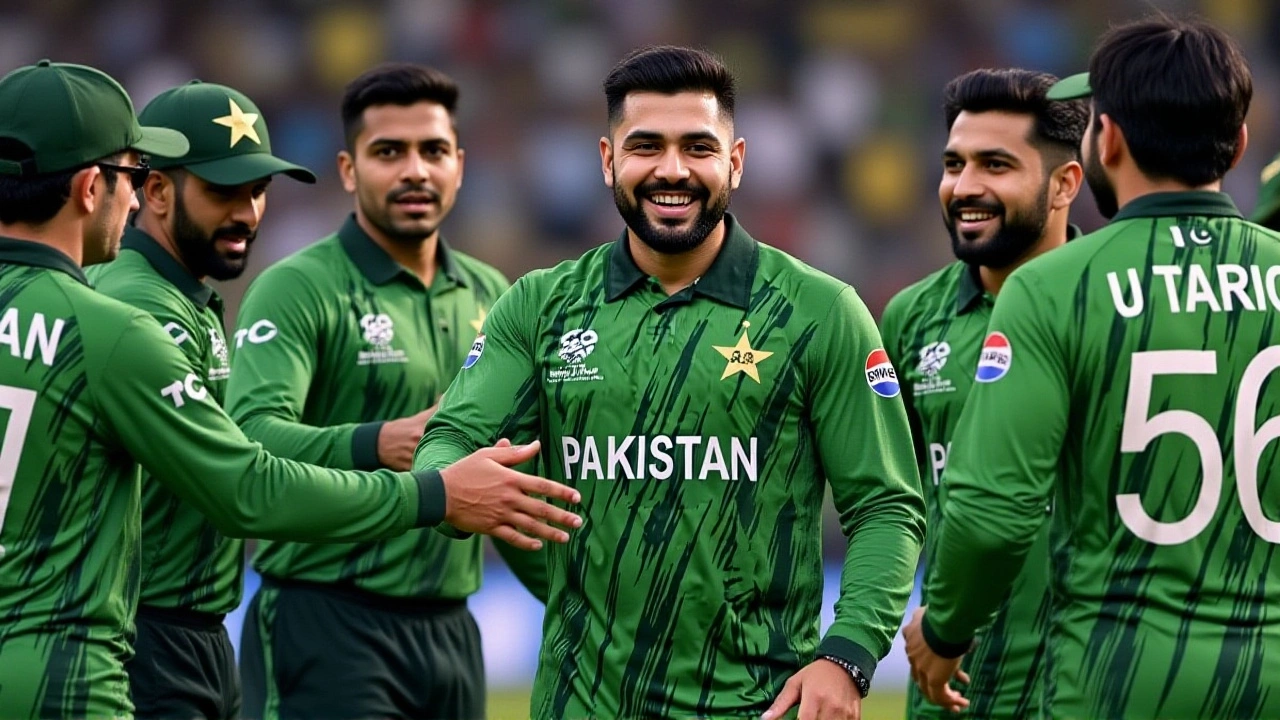
When Harry Brook, captain of England men's national cricket team, smashed a century off just 51 balls on Tuesday night, he didn't just win a match. He secured his team’s ticket to the semi-finals of the ICC Men's T20 World Cup 2026Pallekele International Cricket Stadium. In a tense Super Eights Group 2 clash against Pakistan men's national cricket team, England chased down a modest target of 165 with just one ball to spare, winning by two wickets in Kandy, Sri Lanka.
The atmosphere under the lights at Kandy was electric, but the game itself was a tightrope walk. Pakistan won the toss and elected to bat first, setting what commentators called an "okay score" of 164 for 9 in their 20 overs. It wasn’t a mountain to climb, but it was enough to keep England honest until the final over. Here’s the thing: in T20 cricket, 164 is that tricky middle ground—defensible if you bowl well, chaseable if you strike hard. England chose the latter.
A Captain's Knock
The narrative of the night belonged entirely to Brook. While Will Jacks provided early stability with a quick-fire 28 runs from 23 balls, it was Brook who took control when the pressure mounted. His innings wasn't just about aggression; it was about precision under the spotlight. Scoring 100 runs, he became the first England captain to score a century in men's T20 Internationals—a historic milestone that ESPN highlighted immediately after the stumps were drawn.
"The run chase was dominated by one player and that was Harry Brook," noted Willow TV commentary, adding that Brook "just loves playing against Pakistan." That affinity showed in every shot. Whether driving through the covers or pulling deep into the outfield, Brook looked comfortable despite the high stakes. The ICC’s own coverage labeled the performance a "sensational ton," explicitly crediting it with guiding England into the semi-finals. It’s rare for a captain to carry both the leadership burden and the batting load so effectively in a knockout-stage qualifier.
Pakistan's Bowling Resistance
But don’t think Pakistan went quietly. Left-arm pacer Shaheen Shah Afridi was a nightmare for England’s middle order, claiming four wickets in his spell. Highlight reels focused heavily on his figures, noting "four wickets for Shaheen Sha Aredi" (as pronounced in broadcast commentary). His ability to extract bounce and movement on a pitch that offered little assistance kept England’s run rate in check for long periods.
Despite Afridi’s heroics, Pakistan’s total of 164/9 felt fragile. The batting lineup struggled to build partnerships, losing wickets at regular intervals. By the time the 20th over ended, the scoreboard read 164 for 9. It was a score that demanded perfection from England’s bowlers—and they didn’t get it. Instead, they got Brook’s brilliance.
The Final Moments
With England needing a few runs to win in the final over, the tension was palpable. The winning run came off the bat of a player identified only as "Joel" in highlight commentary (likely Joel Curran, though the surname wasn't confirmed in the snippet). It was a moment of relief mixed with celebration. England finished on 166/8 in 19.1 overs, securing two crucial points in the Super Eights standings while Pakistan walked away empty-handed.
This victory wasn't just about pride; it was mathematical. With this win, England booked their spot in the semi-finals of the ICC Men's T20 World Cup 2026. For Pakistan, the loss means elimination from the tournament, a harsh reality in the high-stakes world of global cricket. The contrast between the two teams' fortunes was stark: one celebrating a historic captain’s knock, the other mourning a missed opportunity.
Why This Matters
Beyond the immediate result, this match highlights the evolving role of captains in T20 cricket. Leaders like Brook are expected to lead from the front, not just from the dugout. His century wasn't just personal glory; it was strategic leadership. Meanwhile, Pakistan’s inability to defend a competitive total raises questions about their batting depth and death bowling strategy—issues they’ll need to address before their next major tournament.
For fans, the match served as a reminder of why T20 cricket is so captivating. Every ball matters, every partnership counts, and one player’s form can decide the fate of a nation. As England prepares for the semi-finals, all eyes will be on Brook again. Can he replicate this magic? Or will another star step up?
Frequently Asked Questions
Who scored the winning run for England?
The winning run was hit by a player referred to as "Joel" in broadcast highlights. While not explicitly named in the provided snippets, this likely refers to all-rounder Joel Curran, who often finishes chases for England. The exact identity isn't fully detailed in the source material, but the margin of victory was two wickets with one ball remaining.
What is special about Harry Brook's century?
Harry Brook’s 100 runs from 51 balls makes him the first England captain to score a century in men's T20 Internationals. This historical milestone underscores his dual role as leader and key batsman, adding significance to his performance beyond just the match outcome.
How did Pakistan perform with the ball?
Pakistan’s bowling attack was spearheaded by Shaheen Shah Afridi, who took four wickets. Despite his strong effort, the team could only restrict England to 166/8, failing to defend their total of 164/9. The lack of support from other bowlers contributed to England’s successful chase.
Where was the match played?
The match took place at the Pallekele International Cricket Stadium near Kandy, Sri Lanka. It was a night fixture scheduled for February 24, 2026, part of the Super Eights stage of the ICC Men's T20 World Cup 2026.
What happens next for England?
By winning this match, England has qualified for the semi-finals of the ICC Men's T20 World Cup 2026. They will now face one of the other top teams in the knockout stage, aiming to reach the final and compete for the title.